What is Reciprocal Teaching: A Simple Guide for Educators
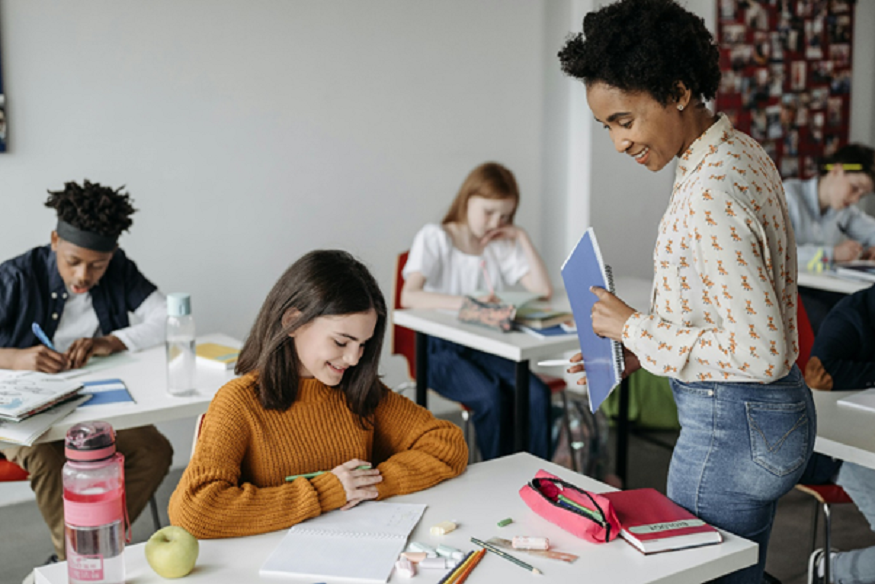
In today’s classrooms, teaching is no longer about delivering information; it’s about helping students understand, question, and engage deeply with what they learn. One of the most effective strategies that supports this shift is reciprocal teaching. Rooted in collaboration and active learning, this approach transforms students from passive listeners into active participants in the learning process.
But what exactly is reciprocal teaching, and why is it gaining so much attention among educators worldwide?
Let’s break it down in a way that’s practical, relatable, and classroom-ready.
Understanding Reciprocal Teaching
Reciprocal teaching is an instructional strategy designed to improve reading comprehension through structured dialogue between teachers and students. It was developed in the 1980s by educational psychologists Annemarie Palincsar and Ann L. Brown, based on research in cognitive science and learning theory.
At its core, reciprocal teaching involves students taking on the role of the teacher in small group discussions.
They guide each other through a text using four key strategies:
- Predicting
- Questioning
- Clarifying
- Summarizing
Rather than simply reading and answering questions, students actively engage with the text, making meaning through discussion and collaboration.
Why Reciprocal Teaching Matters in Modern Classrooms
Traditional reading instruction often focuses on comprehension as an outcome; students read a passage and then answer questions. Reciprocal teaching, however, focuses on the process of understanding.
This approach is especially important today because:
- Students need critical thinking skills, not just recall
- Classrooms are increasingly diverse, requiring adaptable teaching methods
- Engagement levels improve when students are actively involved
Research has consistently shown that reciprocal teaching improves comprehension, especially for struggling readers. It encourages students to think aloud, share perspectives, and develop deeper insights.
The Four Core Strategies Explained
Let’s explore the four pillars of reciprocal teaching practically:
1. Predicting
Before reading, students make predictions about what the text might be about. This activates prior knowledge and sets a purpose for reading.
For example, students might look at a title, headings, or images and discuss what they expect to learn. This step creates curiosity and prepares the mind to engage with the content.
2. Questioning
As students read, they generate questions about the text. These can range from factual to analytical.
This strategy encourages learners to:
- Identify key ideas
- Think critically about the content
- Engage more deeply with the material
Questioning shifts the focus from answering questions to creating them. This is a powerful change in mindset.
3. Clarifying
During reading, students identify parts of the text that are unclear and work together to understand them.
This might involve:
- Looking up unfamiliar words
- Re-reading sections
- Discussing confusing ideas
Clarifying builds confidence and ensures that students do not move forward with misunderstandings.
4. Summarizing
After reading, students summarize the main ideas in their own words.
This helps them:
- Consolidate understanding
- Identify key points
- Develop communication skills
Summarizing reinforces learning and ensures that students can articulate what they have learned.
How Reciprocal Teaching Works in Practice
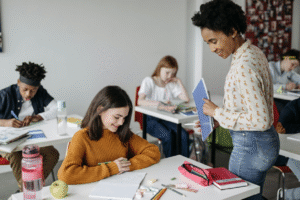
Reciprocal teaching is typically implemented in small groups, with students taking turns leading the discussion. Initially, the teacher models each strategy, demonstrating how to think aloud and engage with the text.Over time, responsibility shifts to the students.
A typical session might look like this:
- The teacher introduces the text and models the strategies
- Students work in groups, each taking on a role (predictor, questioner, clarifier, summarizer)
- The group discusses the text collaboratively
- Roles rotate to ensure all students practice each skill
This gradual release of responsibility is key to the success of reciprocal teaching.
Benefits of Reciprocal Teaching
Here are a few benefits of reciprocal teaching: it improves comprehension, builds confidence, and encourages active, collaborative learning in the classroom.
1. Improves Reading Comprehension
Reciprocal teaching helps students move beyond surface-level reading by actively engaging with the text. By predicting, questioning, clarifying, and summarizing, learners develop strategies that enable deeper understanding and long-term retention of information.
2. Encourages Active Learning
Instead of passively receiving information, students become active participants in the learning process. They think critically, ask questions, and contribute to discussions, which increases engagement and makes learning more meaningful.
3. Builds Confidence
When students take on the role of the teacher, they develop a sense of ownership over their learning. This responsibility boosts their confidence, helping them express ideas more clearly and participate more actively in classroom activities.
4. Develops Critical Thinking Skills
Reciprocal teaching encourages students to analyze, interpret, and evaluate information rather than simply memorizing it. These higher-order thinking skills are essential for academic success and real-world problem-solving.
5. Supports Collaborative Learning
Group-based discussions foster teamwork and communication among students. They learn to listen to different perspectives, respect diverse opinions, and build on each other’s ideas, creating a more inclusive and interactive learning environment.
Adapting Reciprocal Teaching for Different Age Groups
Reciprocal teaching is highly flexible and can be adapted to suit learners at different developmental stages. By modifying the complexity of texts and the depth of discussion, educators can make this strategy effective across all age groups.
-
Early Primary Years
At this stage, the focus should be on introducing the strategy simply and engagingly. Teachers can use short texts, picture books, and visual aids to help students understand concepts like predicting and summarizing.
Activities should be interactive and guided, with the teacher modeling each step. The goal is to build foundational comprehension skills while keeping the learning process fun and accessible.
-
Upper Primary and Secondary
As students grow, reciprocal teaching can be applied to more complex texts such as stories, articles, and subject-based content. Here, the emphasis shifts toward deeper questioning, critical analysis, and structured discussions.
Students can take more responsibility by leading group discussions and exploring multiple perspectives. This stage helps develop independent thinking and stronger analytical skills.
-
Higher Education
In higher education settings, reciprocal teaching becomes a tool for advanced academic engagement. Students can use it to analyze research papers, case studies, and theoretical texts.
Discussions become more sophisticated, focusing on the interpretation, evaluation, and application of knowledge. This prepares learners for professional environments where critical thinking and collaborative problem-solving are essential.
Educators trained through programs like a Bachelor of Education are equipped to adapt such strategies effectively across different learning stages, ensuring that teaching remains relevant, engaging, and impactful.
Bottom Line
Reciprocal teaching is more than a strategy—it is a mindset. It transforms the classroom into a space where students think, question, and learn together.
As educators continue to explore innovative teaching methods, approaches like reciprocal teaching will play a crucial role in shaping the future of education. Teachers trained through programs such as a B.Ed. in Primary Education Online are better equipped to implement these strategies effectively, creating engaging and impactful learning experiences.
Because in the end, the goal of education is not just to teach students what to think, but to teach them how to think.